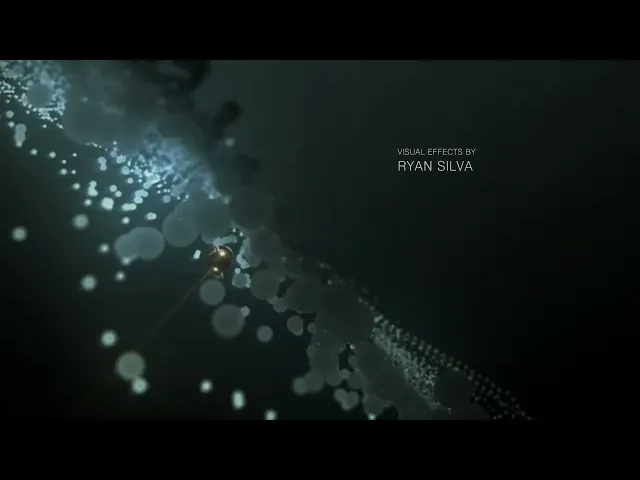
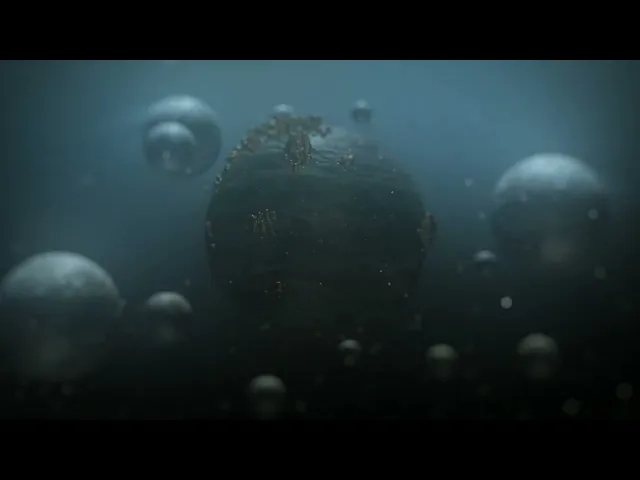
The Hadal Project is a personal world-building project and fictional title sequence that explores the uncharted depths of an alien ocean. Inspired by Subnautica, it imagines the opening of a sci-fi series where every dive uncovers new mysteries—from the aftermath of a crash landing and a deadly bacterial outbreak to towering leviathans that rule the darkness below. Blending cinematic storytelling with 3D animation, motion design, and VFX, I set out to create an immersive world that captures both the wonder and the fear of the deep.
Ideation
The biggest challenge during The Hadal Project was deciding how much story to include in a short title sequence. My original concept centered heavily around the deadly bacteria, with the visuals following a distant flashlight that revealed its spread alongside wreckage, alien architecture, and the aftermath of the crash.
As the project evolved, I realized the bacteria had become the entire story rather than just one piece of a much larger world. To create a stronger visual flow, I shifted the focus to the continuous descent of an escape pod. This approach let the bacteria become one element among many, allowing the sequence to gradually uncover the planet's mysteries while ending with a human element that hints at the larger narrative. Simplifying the story gave the atmosphere and world-building room to take center stage.